- Ear, Nose & Throat
Ear
Nose
- Head & Neck
- Contact Us
- Ear, Nose & Throat
Ear
Nose
- Head & Neck
- Contact Us
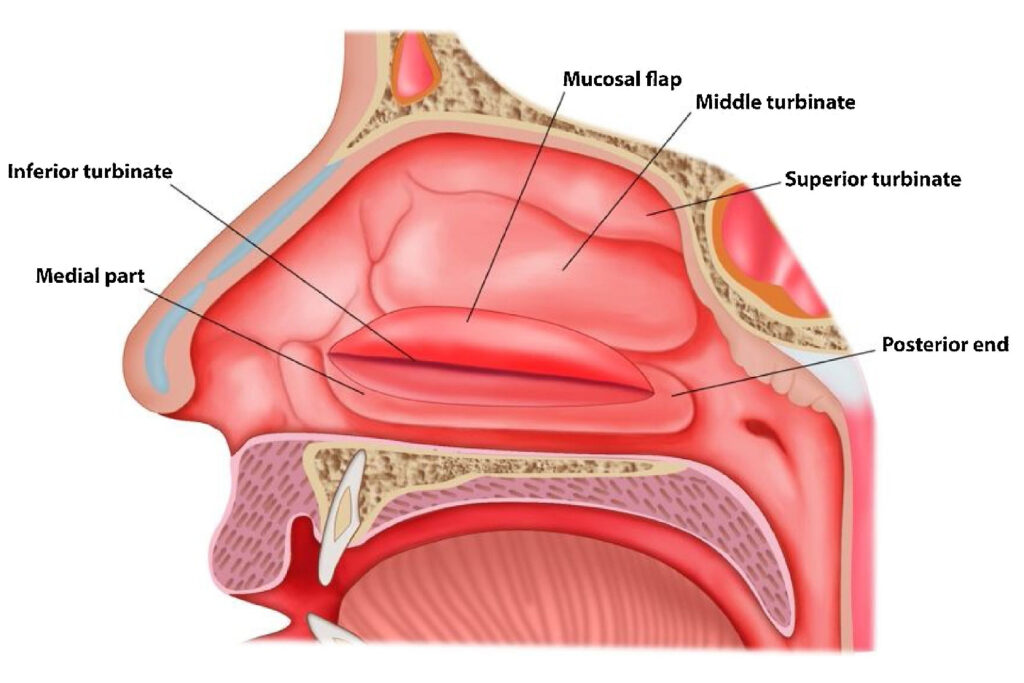
Turbinate hypertrophy refers to the enlargement of the nasal turbinates, which are long narrow bony structures covered by soft tissue lining the side walls of the nose. When these structures become chronically inflamed due to allergies, environmental irritants, or infection, the inferior turbinates can swell and restrict airflow through one or both nostrils. This ongoing swelling can lead to persistent nasal congestion and difficulty breathing through the nose.
Inside the nasal cavity along the side walls are structures known as turbinates. These act as natural air regulators that help humidify, warm, and filter the air as it enters the nose and travels to the lungs.
Turbinates play a vital role in respiratory health by ensuring that inhaled air is properly conditioned before reaching the lower airways. Without this process, the lungs would be exposed to dry, cold, and unfiltered air, which could cause irritation and inflammation.
There are four types of turbinates within the nose:
The inferior turbinates are the largest and most functionally important. They are located on both sides of the nasal septum and are made of spongy, curved bone covered by mucous membranes. These membranes support the immune system by trapping particles and helping the lymphatic system respond to irritants.
Inferior turbinates can swell or shrink depending on factors such as sinus infections, allergies, or changes in environmental temperature. It is normal for most people to experience some degree of turbinate fluctuation during their lifetime.
However, when the inferior turbinates remain persistently enlarged and interfere with normal breathing, the condition becomes chronic and is referred to as turbinate hypertrophy.
At ENT Specialists of Alberta, our experienced ear nose and throat physicians evaluate turbinate hypertrophy using advanced diagnostic tools and develop personalized treatment plans to restore comfortable nasal breathing for patients throughout Alberta. If you are experiencing ongoing nasal congestion or difficulty breathing through your nose, contact ENT Specialists of Alberta to schedule a consultation.
Common symptoms of turbinate hypertrophy include ongoing nasal congestion, difficulty breathing through the nose, and snoring. These symptoms occur when enlarged turbinates restrict airflow within the nasal passages. Some patients may also notice mouth breathing, disrupted sleep, or a constant feeling of nasal blockage that does not improve with typical allergy treatments.
Turbinate hypertrophy is often associated with conditions such as frequent nosebleeds, chronic sinus infections, and long standing sinus inflammation. Many of these issues may also be linked to a deviated septum.
The nasal septum is the thin wall of bone and cartilage that separates the left and right nasal passages. When the septum shifts or curves to one side, it is referred to as a deviated septum. This displacement can reduce airflow, make breathing more difficult, and increase the risk of chronic sinus infections, persistent post nasal drip, headaches, snoring, sleep apnea, bad breath, and even dental concerns.
When the nasal septum deviates toward one side, the inferior turbinate on the opposite side often becomes enlarged as the body attempts to compensate for the reduced airflow. As a result, many patients experience blockage in both nasal passages, with one side affected by the deviated septum and the other by turbinate enlargement. This combination is a common cause of persistent nasal obstruction seen by ENT Specialists of Alberta.
Treatment for turbinate hypertrophy depends on the severity of symptoms and the underlying cause. Options may include:
In some cases, turbinate reduction may be performed alongside septal correction surgery to address both turbinate hypertrophy and a deviated septum at the same time, improving long term breathing outcomes.
At ENT Specialists of Alberta, our experienced ear nose and throat physicians work closely with patients across Alberta to provide personalized treatment plans using advanced diagnostic tools and minimally invasive techniques. Our goal is to restore comfortable breathing and improve quality of life.
Leaving nasal obstruction untreated can lead to worsening symptoms over time. If you are experiencing chronic nasal congestion or breathing difficulties, contact ENT Specialists of Alberta today to schedule a consultation and take the first step toward clearer breathing and better overall health.
Discover comprehensive ENT care with our network of experienced providers across multiple convenient locations. From routine check-ups to specialized treatments, we’re here for all your ear, nose, and throat needs.